
Software Consulting Service Market Insights: Growth, Trends, Drivers & Outlook 2026–2034


Software decisions are becoming harder as businesses navigate cloud platforms, AI, legacy systems, cybersecurity requirements, integrations, and rapidly changing customer expectations. According to Intel Market Research, the global software consulting service market was valued at $110.3 billion in 2025, is projected to reach $118.9 billion in 2026, and could grow to $200.5 billion by 2034, representing a 9.2% CAGR.
This market now extends beyond traditional IT advice into software architecture design, cloud migration, system integration, data analytics, AI implementation, modernization, and bespoke solutions. But what is driving this growth—and what does it actually mean for businesses?
What Does the Latest Software Consulting Market Report Tell Us?

Software Consulting Market Size and Forecast
The latest Intel Market Research report estimates that the global software consulting market will expand from $110.3 billion in 2025 to $118.9 billion in 2026, reaching $200.5 billion by 2034 at a 9.2% CAGR. That represents roughly 81% growth over the forecast period.
Year | Market Size |
2025 | $110.3B |
2026 | $118.9B |
2034 | $200.5B |
CAGR | 9.2% |
The report identifies North America as the largest market and Asia-Pacific as the fastest-growing region. Its scope covers IT strategy consulting, software architecture design, system integration, cloud and data consulting, and custom solution consulting.
These figures should be viewed specifically as Intel Market Research's estimate, rather than an uncontested industry benchmark.
Different research firms can produce different market sizes and growth forecasts because they may define and measure the software consulting market differently. The more important takeaway is the consistent direction: businesses are allocating greater attention and spending toward specialized technology expertise.
Why Does Software Consulting Market Growth Matter to Technology Leaders?
The growth of the software consulting market signals more than rising technology spending—it reflects how difficult technology decisions have become. Businesses now manage expanding cloud environments, APIs, AI tools, integrations, and legacy platforms, making the consequences of poor architecture or technology selection more expensive. Internal teams may understand the product but lack specialized expertise in AI, cloud modernization, cybersecurity, or complex integration projects.
At the same time, technology cycles are shortening, leaving little room for years-long experimentation. Leaders must also demonstrate measurable ROI from every major technology investment. As a result, software consulting is increasingly becoming a decision-making layer between business strategy and technology execution, helping organizations evaluate options, reduce technology risk, and move from ideas to practical outcomes.
What Is Driving the Software Consulting Market Growth?

The software consulting market growth is being driven by a simple business reality: technology decisions are becoming harder, while the cost of getting them wrong is increasing. The Intel Market Research report highlights several forces behind this demand, including digital transformation, cloud adoption, AI, modernization, and rising regulatory pressure.
Digital Transformation
Many businesses still rely on manual workflows, disconnected systems, and outdated processes that slow operations. Consultants help organizations identify these gaps, prioritize technology investments, and build practical transformation roadmaps instead of adopting technology without a clear business objective.
Cloud Migration and Modernization
Moving workloads to cloud or hybrid environments creates challenges around architecture, security, integration, migration sequencing, and ongoing costs. Cloud consulting helps businesses address these issues before migration turns into an expensive rework project.
AI Adoption
Businesses increasingly want AI capabilities but often struggle to identify where AI can produce measurable value. Consulting can bridge that gap through AI strategy, data-readiness assessment, model integration, and AI/ML implementation.
Legacy Software Modernization
Critical legacy applications cannot always be replaced without disrupting operations. Consultants help determine whether an application should be modernized, rebuilt, integrated with newer systems, or eventually replaced.
Cybersecurity and Compliance
As regulatory and security requirements become more complex, organizations in finance, healthcare, government, and other regulated sectors need technology architectures that address both operational requirements and compliance obligations. This is increasing demand for cybersecurity-focused consulting and secure system design.
How Is Technology Decision-Making Changing in 2026?
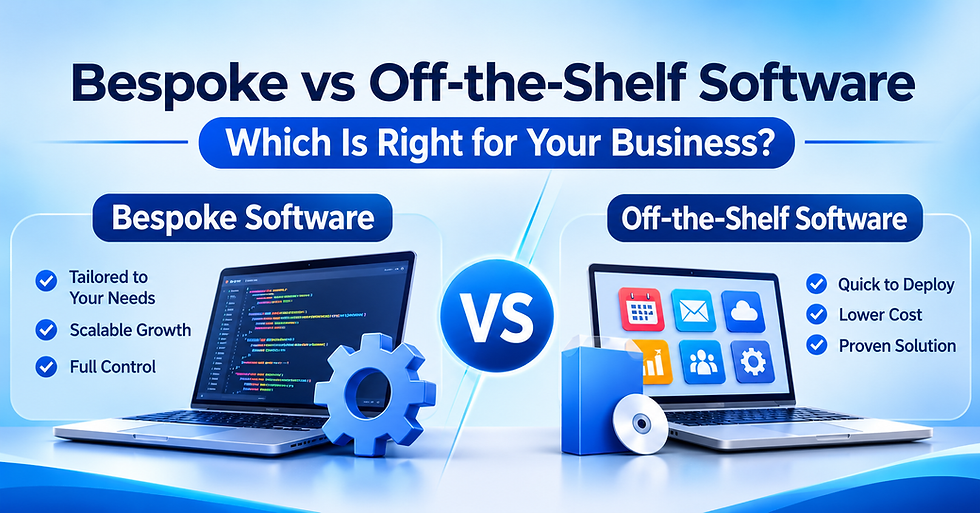
In 2026, technology decision-making is moving beyond the simple question of “What technology should we buy?” Business leaders are increasingly asking “What should we build, integrate, modernize, or replace?” The decision now involves weighing SaaS against custom software, cloud against hybrid environments, centralized against distributed architectures, and AI adoption against actual AI readiness. Even the choice between integrating an existing platform and replacing it entirely can have major implications for cost, scalability, security, and operational disruption.
From “What Technology Should We Buy?” to “What Should We Build?”
More technology choices do not necessarily make decisions easier. A business can choose from hundreds of SaaS products, cloud platforms, AI models, development frameworks, and integration tools, yet still struggle to identify the option that best fits its processes and long-term goals.
This is where software development consulting becomes valuable. The role is not simply to recommend a technology. It is to evaluate the business context, technical constraints, risks, and expected outcomes before a major investment is made.
Why This Matters
The real value of consulting is reducing the risk and cost of making the wrong technology decision. Choosing an unsuitable platform can create expensive migrations, integration problems, technical debt, or years of operational limitations. Good consulting helps businesses make technology decisions based on business outcomes—not technology trends alone.
Is AI Changing the Role of Software Consultants?

AI is changing software consulting from a largely experience-driven process into a more data-assisted and analytical discipline. Consultants can now use AI for code analysis, software architecture assessment, risk identification, effort estimation, documentation, data analysis, and performance diagnostics.
AI can also surface patterns and predictive insights that help teams identify technical problems earlier and evaluate potential solutions faster.
But AI does not eliminate the need for consulting expertise. Businesses still need people who can understand requirements, prioritize technology investments, evaluate trade-offs, manage implementation risks, and connect technical decisions to measurable business goals.
An AI system may identify several architectural options, but deciding which one fits the organization’s budget, operations, compliance requirements, and growth plans still requires human judgment.
The future is therefore less about consultants vs. AI and more about consultants using AI to deliver deeper technical and strategic value.
Where Does Software Consulting Fit Into Software Development?
Software consulting sits between a business problem and the technology solution used to solve it. A typical journey looks like:
Business Problem → Technology Assessment → Strategy → Architecture → Build/Buy Decision → Development → Integration → Deployment → Optimization
Importantly, software consulting does not automatically mean building a new application. Depending on the situation, a consultant may recommend buying an existing SaaS product, integrating multiple systems, modernizing legacy software, migrating workloads to the cloud, adding AI capabilities, or reengineering an existing platform. A custom solution may only be recommended when off-the-shelf options cannot adequately meet the organization’s requirements.
When a custom approach makes sense, custom software development services can turn the recommended architecture and requirements into a working product. This is where a software development company can become part of the broader delivery process, handling development, integration, testing, and deployment. For complex initiatives, a custom software development company may work alongside consultants from strategy through optimization.
The distinction is straightforward: a consultant determines what solution makes sense; a development team helps turn that solution into working software. Keeping both functions aligned can reduce costly gaps between strategy and execution.
Which Industries Are Driving Demand for Software Consulting?

Demand for the software consulting services market is closely tied to industries where technology is becoming central to operations, customer experience, compliance, and growth. The Intel report identifies financial services, healthcare, manufacturing, retail and e-commerce, and government/public services among its major application segments.
Financial Services
Banks and fintech companies face pressure to modernize systems while maintaining security and regulatory compliance. Consulting helps organizations evaluate fintech architectures, integrate data, and apply AI and analytics without creating unnecessary operational risk.
Healthcare
Healthcare organizations must connect fragmented data while protecting sensitive information. Consulting supports digital health platforms, system integration, privacy requirements, and modernization of legacy applications.
Manufacturing
Manufacturers adopting Industry 4.0 technologies need to connect IoT devices, automation systems, enterprise software, and operational data. Consulting helps create architectures that allow these systems to work together efficiently.
Retail & E-commerce
Retailers need scalable commerce platforms, connected omnichannel experiences, personalization, and real-time analytics. Consulting helps determine how platforms and data systems should work together as transaction volumes grow.
Government
Government organizations often operate large, aging technology environments while facing pressure to deliver better digital public services. Consulting can support legacy modernization, secure architecture, and large-scale system integration.
What Could Slow Software Consulting Market Growth?
The software consulting market is growing, but that growth is not guaranteed to remain frictionless. Several factors could limit how quickly consulting demand expands or change how providers compete for projects.
Specialized Talent Shortages
Demand for expertise in AI, automation, cloud architecture, cybersecurity, and emerging technologies can outpace the available talent pool. The Intel report identifies specialized technology talent shortages as a key challenge, potentially increasing delivery times and project costs.
AI and Changing Consulting Models
AI can automate parts of analysis, documentation, diagnostics, and development, reducing demand for some traditional consulting activities. Providers will increasingly need to demonstrate value beyond tasks that AI can perform efficiently.
Pricing and Competitive Pressure
Boutique firms, offshore providers, and increasingly capable internal engineering teams are giving businesses more alternatives. This can create pricing pressure and make differentiation harder for consulting providers.
Economic Uncertainty and ROI Expectations
During periods of economic uncertainty, organizations may postpone discretionary technology projects. At the same time, clients increasingly expect measurable business outcomes from consulting investments, raising the bar for project justification and delivery.
What Does the Future of Software Consulting Look Like?
The future of software consulting is likely to be shaped less by giving technology recommendations and more by helping businesses implement and measure technology outcomes. AI-assisted consulting will become more common, supporting code analysis, architecture reviews, risk assessment, data analysis, and predictive diagnostics. At the same time, AI/ML implementation will become a more practical consulting requirement as businesses move from experimentation toward production use cases.
Cloud-native architecture, legacy modernization, cybersecurity consulting, and data and analytics consulting will remain important as organizations manage increasingly complex technology environments. Consulting delivery is also likely to become more hybrid, combining strategic workshops with distributed technical execution.
Another important shift will be toward outcome-based engagements. Instead of measuring value primarily through consulting hours, businesses will increasingly expect improvements such as faster delivery, lower technology risk, better system performance, stronger security, or measurable operational efficiency.
This points toward closer integration between consulting and software development—where strategy, architecture, implementation, and optimization operate as one connected process.
Our Perspective: What the Market Growth Really Means
The most important signal is not simply that the software consulting service market is getting bigger. It is why businesses are willing to invest more in external technology expertise. As software becomes increasingly connected to revenue, operations, customer experience, compliance, and competitive advantage, the cost of making a poor technology decision rises with it.
In our view, this makes consulting less about recommending the latest technology and more about creating confidence around difficult decisions. Businesses need to know whether they should build or buy, modernize or replace, integrate or reengineer, and where emerging technologies such as AI can deliver genuine value.
But making the right decision is only the first step. The real business impact comes from turning that strategy into a secure, scalable, and usable solution. That is where strong technology execution becomes just as important as sound consulting.
From Technology Strategy to Software Execution With Debut Infotech
The gap between deciding what technology to use and successfully implementing it can be where many digital initiatives lose momentum. Debut Infotech helps businesses bridge that gap by combining technology consulting with hands-on software execution. From defining technology requirements and evaluating solutions to building, integrating, deploying, and optimizing them, the focus remains on turning strategy into practical outcomes.
As a custom software development company, Debut Infotech can support organizations that need applications built around specific operational or product requirements. Its custom software development services can cover web and mobile applications, enterprise software, AI integration, system integration, legacy modernization, and cloud-enabled solutions.
For businesses that need both strategic guidance and technical delivery, working with a software development company that understands the broader technology roadmap can help keep architecture, development, and business objectives aligned.
If you have a technology idea, modernization challenge, integration requirement, or software roadmap that needs a clearer path forward, discuss your requirements with Debut Infotech to explore the right strategy and execution approach.
Final Takeaway
The software consulting service market is growing because technology decisions are becoming more complex, not simply because businesses are spending more on software. Cloud migration, AI adoption, legacy modernization, cybersecurity, and digital transformation are forcing organizations to make high-impact decisions about what to build, buy, integrate, or replace.
The bigger opportunity lies in connecting those decisions to measurable business outcomes. Consulting can help reduce technology risk, but successful execution ultimately determines whether a strategy delivers value. Businesses therefore need a clear path from assessment and architecture to development, integration, deployment, and optimization.
As technology continues to evolve, the strongest approach will combine strategic consulting, specialized expertise, and reliable software execution to turn complex technology challenges into practical business solutions.
Frequently Asked Questions
1. What is driving the growth of the software consulting market?
The software consulting market is being driven by digital transformation, cloud migration, AI adoption, legacy software modernization, cybersecurity requirements, and increasing technology complexity. Businesses increasingly need specialized expertise to evaluate technology options, reduce implementation risks, and align technology investments with long-term business objectives.
2. Why do businesses need software consulting in 2026?
Businesses face more technology choices than ever, including SaaS platforms, cloud services, AI models, and custom development options. Software consulting helps organizations determine what to build, buy, integrate, modernize, or replace based on their requirements, budget, scalability, security, and expected business outcomes.
3. Will AI replace software consultants?
AI is unlikely to eliminate software consulting because businesses still need human
judgment for requirements analysis, architecture trade-offs, risk evaluation, technology prioritization, and implementation planning. Instead, AI is expected to enhance consulting by assisting with code analysis, documentation, diagnostics, risk identification, data analysis, and predictive insights.
4. Does software consulting always involve custom software development?
No. Software consulting may result in several different recommendations, including purchasing SaaS, integrating existing systems, migrating to the cloud, modernizing legacy applications, adding AI capabilities, or building a custom application. Custom software development is appropriate when existing solutions cannot adequately address the business requirements.
5. How can businesses connect software consulting with implementation?
Businesses can connect consulting with implementation by involving technical development teams early in the process. Consultants can define requirements, strategy, and architecture, while development teams handle application development, integration, testing, deployment, and optimization. Keeping these functions aligned helps reduce the gap between technology strategy and execution.
6. What should CTOs consider before investing in Enterprise Web Application Development Services?
CTOs should evaluate business requirements, scalability, security, integration needs, technical architecture, development costs, maintenance requirements, and long-term flexibility before investing in Enterprise Web Application Development Services. CTOs should assess the development partner’s technical expertise, delivery approach, security practices, and ability to support the application after launch. For a structured evaluation of these factors, the Enterprise Web Application Development Guide for CTOs can help technology leaders make more informed decisions and align development investments with broader business objectives.


Comments